Wednesday, August 19, 2015

Homeownership: A Key To Well-Being In Retirement

Homeownership:  A Key To Well-Being In Retirement


Homeownership:¬ A Key to Well-Being in Retirement | Keeping Current Matters
There has been much talk about homeownership and whether it is a true vehicle for building wealth. A new report looks at the impact owning a home has on the financial wellbeing of people closing in on their retirement years (ages 55-64).
In recently released study by the Hamilton ProjectTen Economic Facts about Financial Well-Being in Retirement, it was revealed that:
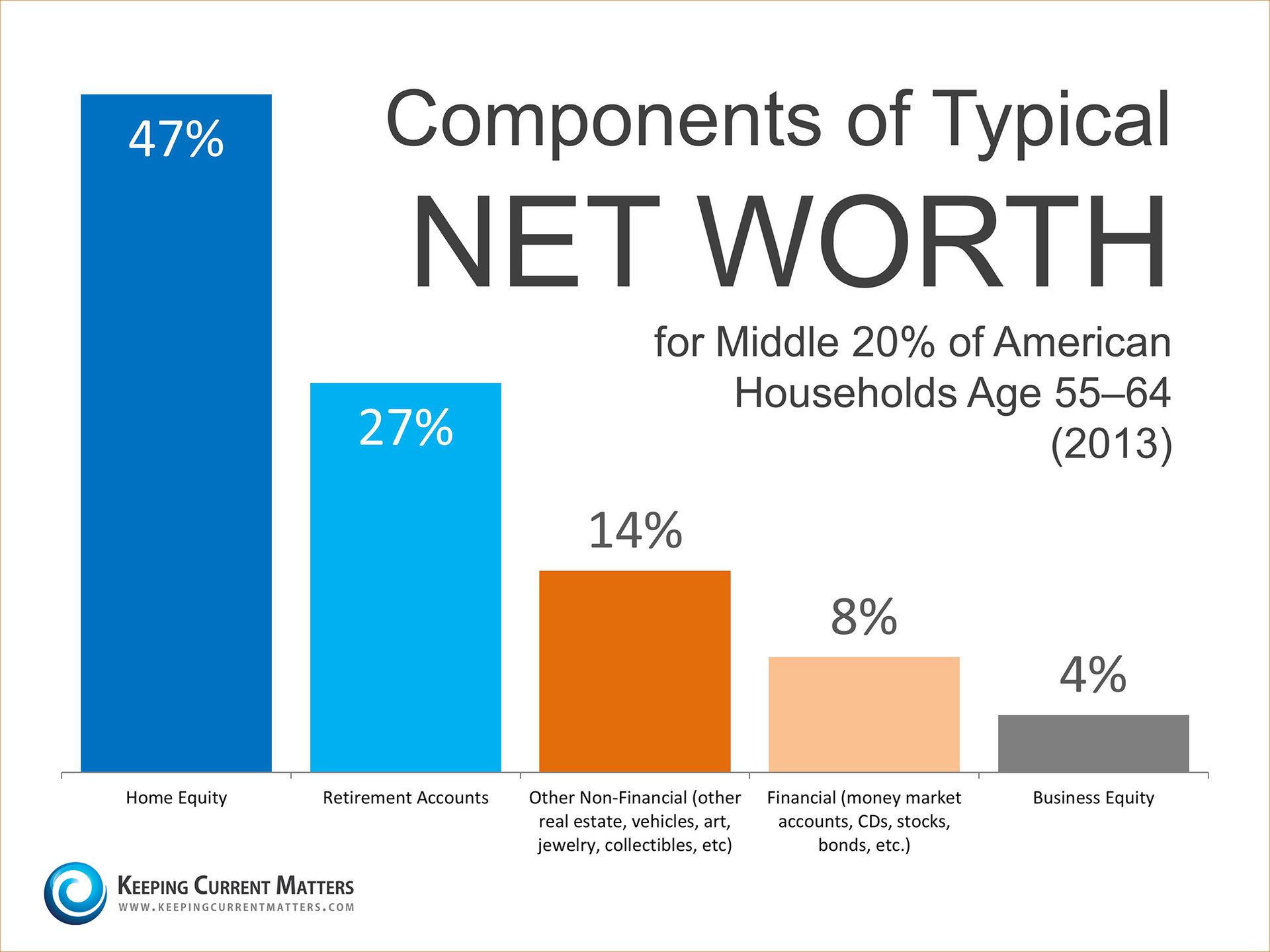
1. Middle-class households near retirement age have about as much wealth in their homes as they do in their retirement accounts.
“Over the past quarter century the largest single source of wealth for all but the richest households nearing retirement age has been their homes, which accounted for about two-fifths of net worth in the early 1990s and accounts for about one-third today.”
2. Home equity is a very important source of net worth to all but the wealthiest households near retirement age.
“Home equity is an important source of wealth for middle income households, accounting for more than one-third of total net worth for the second, third, and fourth quintiles of the net worth distribution… The fifth quintile has a much larger share in business equity—almost a quarter—than any other quintile. (The figure leaves out the bottom quintile of households because they have negative net worth. It is likely that these households will rely almost exclusively on Social Security in retirement.)”
Here is an asset breakdown for the middle 20% of Americans determined by median net worth ($165, 720):
Components of Net Worth | Keeping Current Matters
Obviously, the data again proves that homeownership has a big role in building wealth for American families.


Click here for my free Home Buyer's Guide


Debbie Mignogna, ABR, SRS
BHHS Fox & Roach Realtors
267-640-1120

PA-DREAMHOMES.COM


Real Estate Again Seen As Best Investment

Real Estate Again Seen As Best Investment


Real Estate Seen As Best Investment Again | Keeping Current Matters
We are almost back to ‘pre-housing crash’ home values. The inventories of distressed properties (foreclosures & short sales) are shrinking dramatically. The economy is improving. The job numbers are headed in the right direction.
The big question that still remains: Have Americans regained their confidence in real estate as a worthy investment?
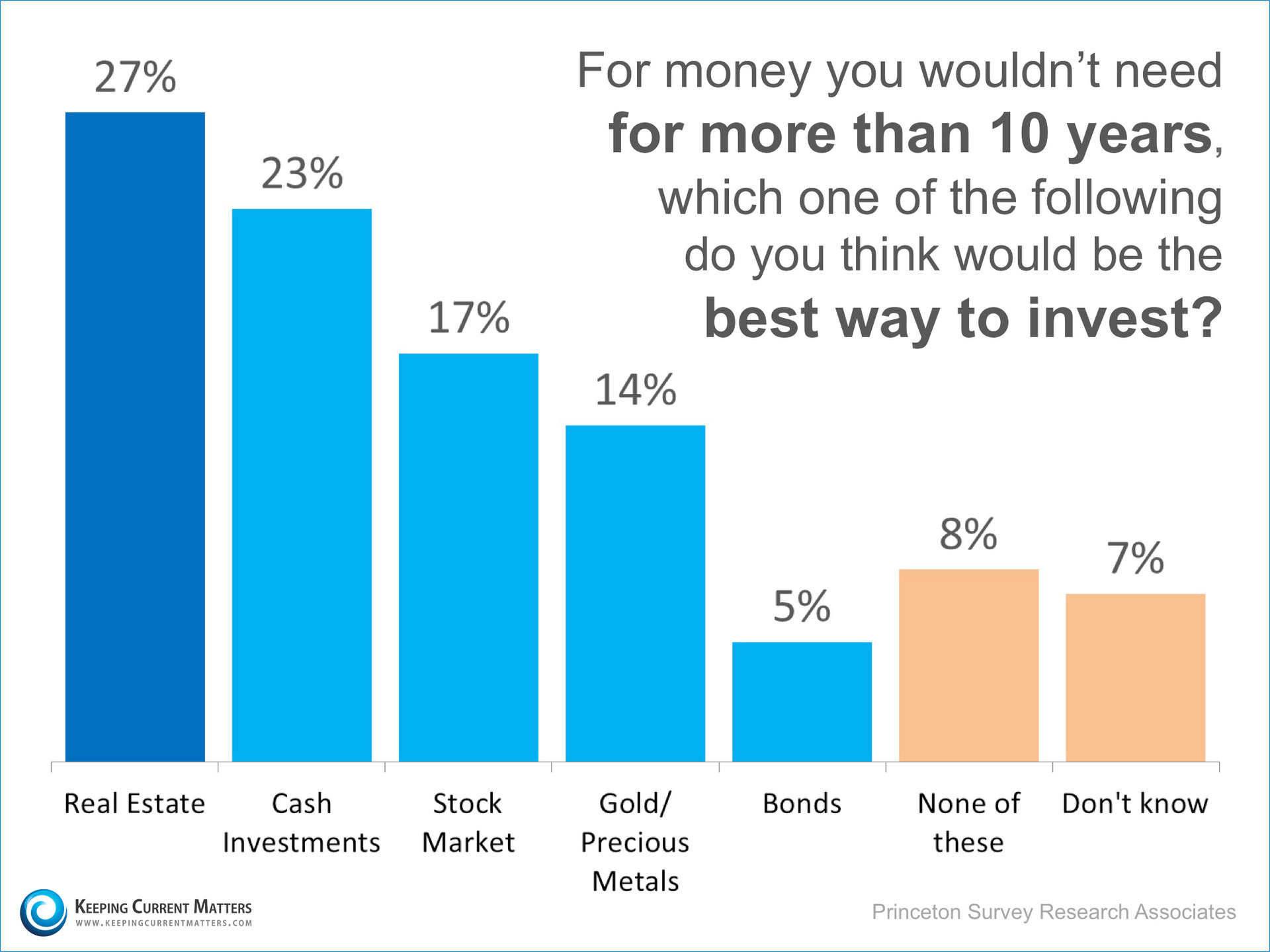
According to a survey conducted by Princeton Survey Research Associates, Americans have put real estate back into first place as the best of all investments.

Here are the results of the survey:

Best Investment | Keeping Current Matters

Bottom Line

Homeownership never lost its place as a key component of the American Dream for a host of financial and non-financial reasons. It is good to see that it has regained the top spot as best overall investment.


Click here for my free Home Buyer's Guide


Debbie Mignogna, ABR, SRES
BHHS Fox & Roach Realtors
267-640-1120


Tuesday, August 18, 2015

Don't Wait to Buy That Dream Home!


Now that the housing market has stabilized, more and more homeowners are considering moving up to their dream home. With interest rates still near 4% and home values on the rise, now may be a great time to make a move.
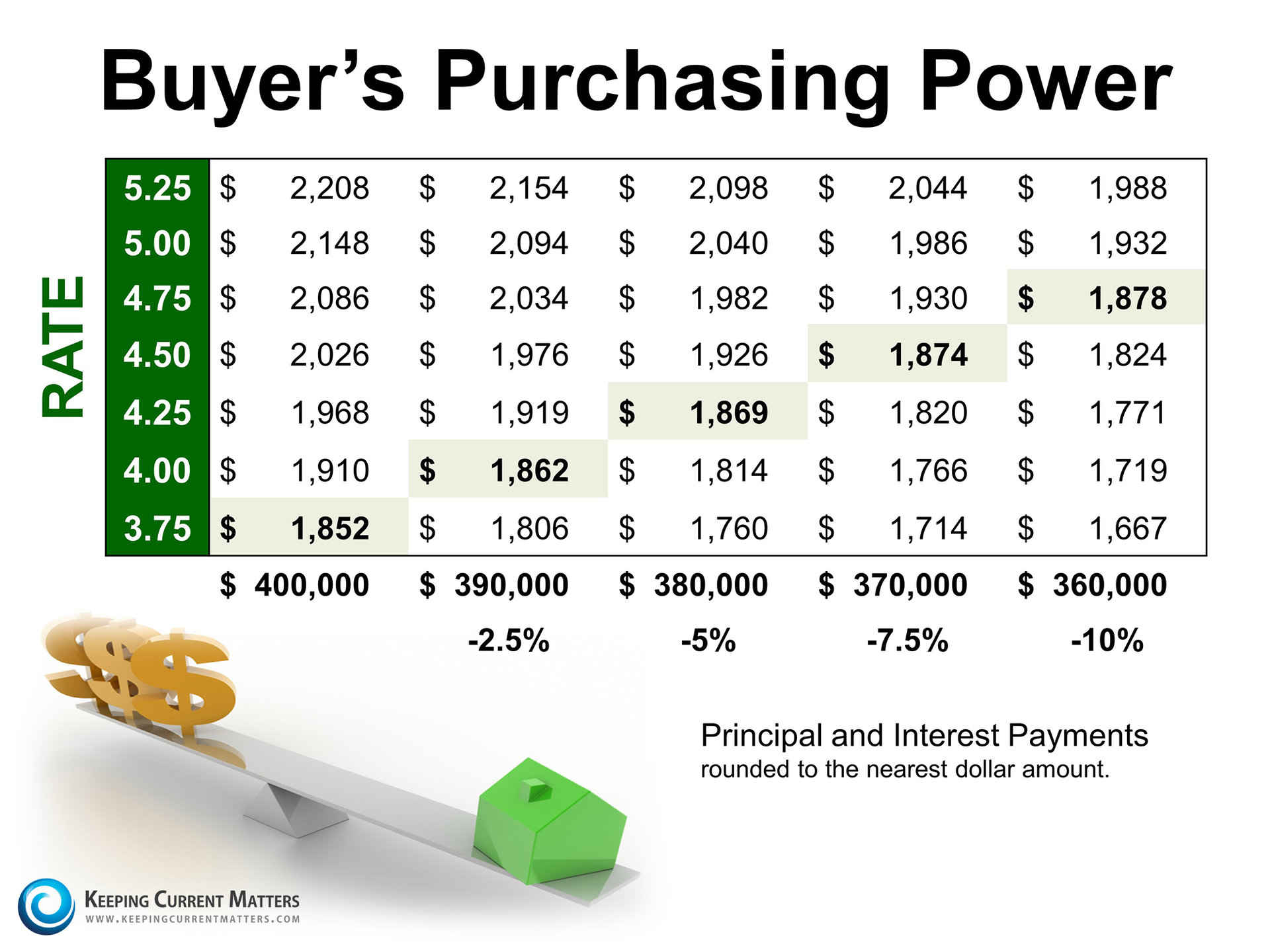
Sellers should realize that waiting while mortgage rates are increasing probably doesn’t make sense. As rates increase, the price of the house you can afford will decrease if you plan to stay within a certain budget for your monthly housing costs.

Here is a chart detailing this point:

Buyer's Purchasing Power | Keeping Current Matters

With each quarter percent increase in interest rate, the value of the home you can afford decreases by 2.5%, (in this example, $10,000). Experts predict that mortgage rates will be closer to 5% by this time next year.
Act now to get the most house for your hard earned money.  
By: Keeping Current Matters

Call me today to find that DREAM HOME!


Click here for my free Home Buyer's Guide


Debbie Mignogna
BHHS Fox & Roach Realtors
267-640-1120


Saturday, August 15, 2015

Top 8 Signs You Shouldn’t Buy That House: How To Quickly Recognize A Money Pit

Top 8 Signs You Shouldn’t Buy That House: How To Quickly Recognize A Money Pit

Buying a Home? Not So Fast

If you live in a hot housing market where desirable properties tend to be snapped up nearly as soon as they’re offered, then you may feel pressured to seal the deal immediately if and when you find a home you really like. But smart homebuyers do their due diligence before committing to a mortgage. Here are some warning signs that the home you’re considering purchasing may not be as good a deal as it seems.

A Shoddy Roof

Your home’s roof is your main line of defense against the elements. A poorly maintained or leaky roof can spell serious trouble down the road. Leaks can cause water damage, and not just to your possessions, but to your home as well. Cracked or missing shingles are an obvious red flag, but it’s not a bad idea to have a professional roofer perform an in-depth inspection, even if the roof appears to be in good repair. That way, you’ll be able to rest easy, knowing your new home’s roof is up to snuff.
Damaged-Roof-Shingles-Repair

Bad Plumbing

If you’re considering purchasing a historic home, there’s a good possibility that the home’s plumbing is as old as the house itself. Older homes are certainly charming, but outdated plumbing systems? Not so much. Check the sinks, toilets, showers, and tubs for good drainage and adequate water pressure. Find out if the home has a septic tank, and if so, how old it is.
Have a look at the water heater. If it’s outdated, it may be set to reach the end of its useful life. An old water heater or faulty toilet isn’t necessarily a no-go, but it’s good to know what you’re getting yourself into. This is another situation where it may be a good idea to enlist the services of a trained professional.

Zoning Restrictions

If you’re considering adding a spare bedroom or guesthouse after you’ve purchased your new home, make sure the property is zoned to allow the additions you’re interested in making. The last thing you want to do is find out too late that you can’t legally complete the process of turning your newly purchased house into the dream home you’ll treasure for a lifetime.

Outdated Wiring in the Home

Homes have had electricity for a long time now, but the wiring systems we now use are much safer than the old-fashioned wiring that’s often found in many older homes. If your new home still has cloth-wrapped wiring and an old-style fuse box, there’s a h3 possibility that you’ll need to have your home rewired, and that can cost as much as $20k. If you’re still convinced that this is the only home for you, then you may be able to use the outdated electrical as leverage for a price reduction.

Homes With Foundation Issues

Foundation issues can spell serious trouble for homeowners. A poor foundation may allow water to leak into the basement, resulting in mold infestations or costly repair bills. Be sure to have a thorough look at the foundation. Cracks wider than the width of your pinky nail are a big red flag. You should also check hard surface floors for cracks, and make sure the drywall is free of cracks as well, especially in corners and around windowsills.
Cracked-Wall

Water Damage

Water damage repairs can be among the most costly repairs to make. Inspect caulking around sinks and toilets very carefully. Check the home’s window seals for signs of leakage. Look for stains on ceilings, especially in the parts of the basement located beneath the kitchen and bathroom. If you see signs of water damage, you’ll definitely want to get a second opinion before making the purchase.

Scope Out the Neighborhood

The people who live in neighboring homes can be a valuable source of information. They may be able to tell you about recent repairs, and they’ll definitely be able to give you a better sense of what life is like in the neighborhood itself. If most of the homes in the neighborhood are up for sale, it may be a sign that the area is not as desirable as the listing made it sound, and that could negatively affect your property value.

Owner Won’t Allow Inspection

Getting a home inspection is an absolute must whenever you’re purchasing a new home. If the seller seems to be trying to dissuade you from conducting an inspection, or refuses to cooperate with an inspector of your choosing, consider it a h3 indication that they’re not being entirely truthful about the home’s condition.

Know What You’re Getting Into

Any of these warning signs can be a deal-breaker, but if you’re in love with the home, you may be willing to deal with certain issues. The most important thing is that you find out exactly what you’re getting yourself into, so you can set your bid accordingly.


Debbie Mignogna
BHHS Fox & Roach
267-640-1120
PA-DREAMHOMES.COM

POSTED IN

Monday, August 10, 2015

WHERE ARE MORTGAGE RATES HEADED? THIS FALL? NEXT YEAR?

WHERE ARE MORTGAGE RATES HEADED?

THIS FALL?  NEXT YEAR?


http://goo.gl/rkEtKh


It looks like they are going up in the next quarter!!!

Debbie Mignogna


Thursday, August 6, 2015